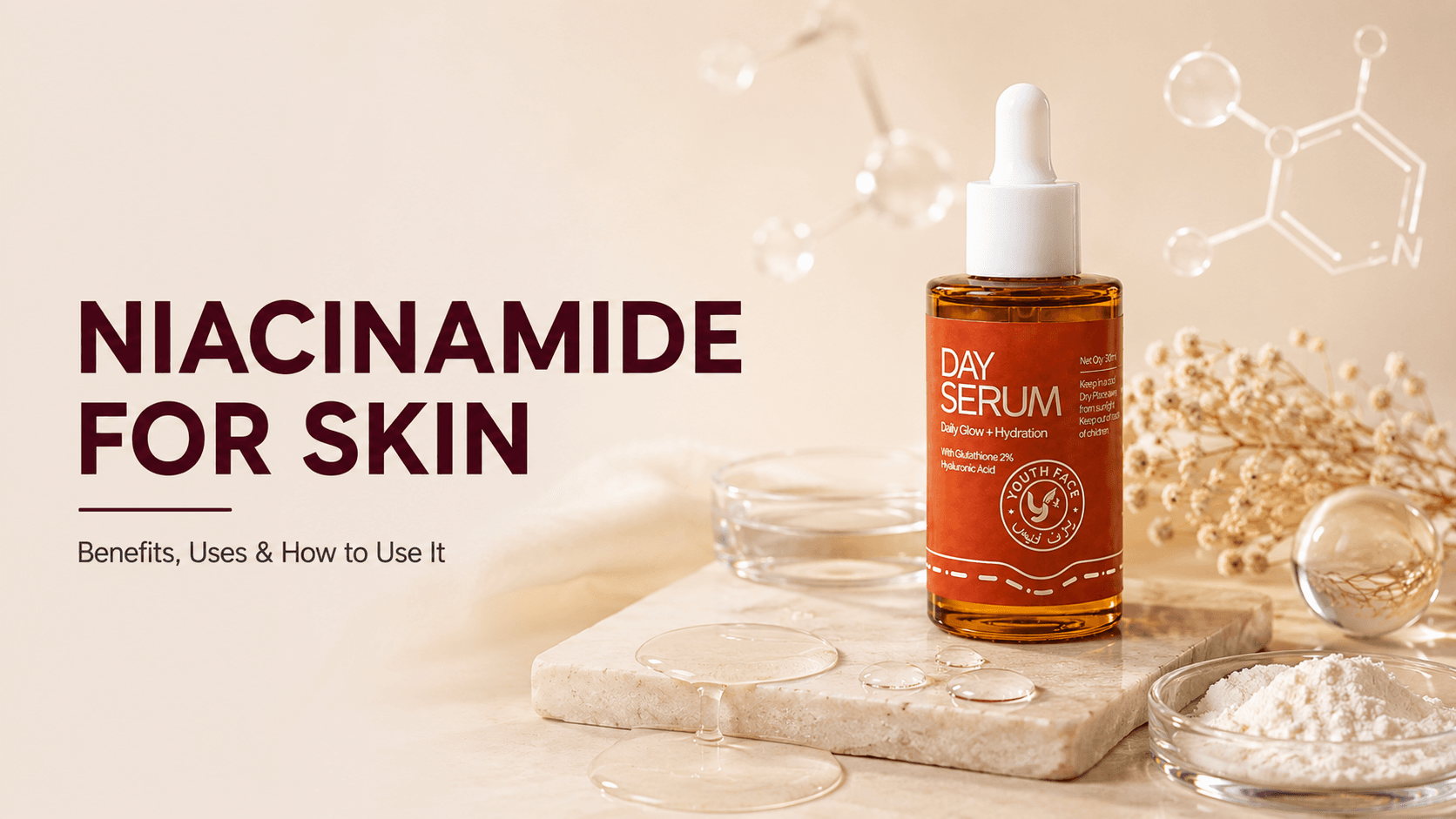
Niacinamide for Skin: How Does Niacinamide Help Your Skin? Benefits, Uses & How to Use It
If you’ve spent time researching skincare ingredients, you’ve probably come across niacinamide.
It has become a popular ingredient in modern skincare because it can be incorporated into routines focused on oil control, skin texture, hydration and a more even-looking complexion.
But what exactly is niacinamide, what does it do for your skin, and how should you use it?
In this guide, we’ll explain niacinamide benefits, how niacinamide works in skincare, who can use it, and how Youth Face incorporates niacinamide into selected skincare formulas.
What Is Niacinamide?
Niacinamide is a form of vitamin B3, also known as nicotinamide.
It is a water-soluble vitamin that is widely used in cosmetic and skincare formulations.
Unlike some stronger exfoliating ingredients, niacinamide is generally considered a versatile skincare ingredient that can be used in routines designed for different skin types.
It is commonly included in products targeting:
Excess oil
Uneven-looking skin tone
Visible pores
Dull-looking skin
Skin texture
Hydration and barrier support
The exact benefits you experience depend on the formulation, concentration, other ingredients and your individual skin.
Niacinamide Benefits : What Are the Benefits of Niacinamide for Skin?
Niacinamide is popular because it can support several aspects of everyday skincare.
1. Helps Manage Excess Oil
For people with oily or combination skin, excess sebum can contribute to a shiny appearance and clogged pores.
Niacinamide is commonly used in skincare formulations designed for oil-control routines.
A balanced routine can help your skin feel cleaner and more comfortable without relying on excessive cleansing.
2. Supports an Even-Looking Skin Tone
Uneven-looking skin tone can have many causes, including sun exposure, post-blemish marks and natural variations in pigmentation.
Niacinamide is frequently used in brightening-focused skincare products to support a more even-looking complexion.
Rather than trying to change your natural skin colour, a good skincare routine should focus on maintaining healthy-looking, radiant skin.
3. Helps Improve the Appearance of Skin Texture
Skin texture refers to how smooth or uneven the surface of your skin appears.
Regular cleansing, hydration and appropriate skincare ingredients can help improve the overall appearance and feel of the skin.
Niacinamide can be part of a routine designed to support smoother-looking skin.
4. Supports the Skin Barrier
Your skin barrier plays an important role in keeping moisture in and helping protect the skin from external environmental factors.
A damaged or weakened barrier can leave skin feeling dry, tight or uncomfortable.
Niacinamide is commonly included in skincare formulations designed to support the skin barrier and maintain comfortable, hydrated-looking skin.
5. Can Complement Acne-Focused Skincare
Niacinamide can be useful in routines designed for oily and blemish-prone skin.
It is often combined with ingredients such as salicylic acid in acne-focused formulations.
However, no single ingredient should be considered a universal solution for acne. Persistent or severe acne should be discussed with a dermatologist.
Niacinamide for Oily Skin
If your skin becomes oily quickly, your routine should focus on keeping the skin clean and balanced without over-cleansing.
The goal isn’t to remove every trace of oil from your skin.
Over-cleansing can leave skin feeling dry and uncomfortable.
Niacinamide for Dark Spots & Uneven-Looking Skin
Dark spots and uneven pigmentation can develop for several reasons, including sun exposure and marks left after blemishes.
Niacinamide is commonly found in products formulated for brightening and even-looking skin.
For best results from a skincare routine, don’t focus on one ingredient alone.
Combine:
Cleansing + Targeted Skincare + Hydration + Sun Protection
Daily sunscreen is particularly important because UV exposure can contribute to the appearance of pigmentation and uneven skin tone.
Niacinamide for Acne-Prone Skin
If you have oily or blemish-prone skin, you may see niacinamide paired with ingredients such as salicylic acid.
Salicylic acid is a beta hydroxy acid commonly used in skincare products designed to help unclog pores.
Niacinamide and salicylic acid therefore appear together in many acne-focused formulations.
However, using more active ingredients doesn’t automatically mean faster results.
Start gradually and follow the instructions provided with your skincare product.
Youth Face Products With Niacinamide
Niacinamide is included in several Youth Face formulations.
Youth Face Pimple Free Serum
The Youth Face Pimple Free Serum (30ml) combines 2% salicylic acid with niacinamide, licorice extract and quinoa seed extract. The formula is positioned for oily and blemish-prone skincare routines and is designed to support clearer-looking skin, oil control and a more even-looking appearance.
The product also contains ingredients such as glycerin and allantoin to support a comfortable skincare experience.
Best suited for routines focused on:
Oily-looking skin
Blemish-prone skin
Pimple marks
Uneven-looking texture
Excess oil
How to use
Youth Face recommends applying 2–3 drops to freshly cleansed, dry skin and gently applying it to affected areas. The product is intended to be left on rather than washed off.
The formula combines papaya extract, niacinamide, salicylic acid, vitamin E and glycerin. It is designed as an everyday cleansing bar for face and body.
The combination makes it suitable for a cleansing routine focused on:
These two ingredients are often confused because they can appear in the same skincare products, but they have different roles.
Ingredient
Common skincare role
Niacinamide
Oil balance, barrier support, even-looking skin
Salicylic Acid
Exfoliation and pore-cleansing
Hyaluronic Acid
Hydration
Vitamin E
Antioxidant and skin-conditioning support
Papaya Extract/Enzyme
Exfoliating and skin-conditioning support
Licorice Extract
Brightening-focused skincare
Some formulations combine multiple ingredients to address several skincare needs in one product.
Can You Use Niacinamide Every Day?
Niacinamide is commonly used in daily skincare products.
However, how frequently you should use a product depends on the specific formulation and your skin’s tolerance.
If you’re introducing a new niacinamide product:
Start with a small amount.
Follow the manufacturer’s directions.
Don’t introduce several new active products at the same time.
Consider a patch test if recommended.
Stop using the product if significant irritation occurs.
Can Niacinamide Be Used With Salicylic Acid?
Niacinamide and salicylic acid can appear together in skincare formulations.
For example, Youth Face’s PimpleFree Serum contains 2% salicylic acid and niacinamide in the same formula.
However, if you’re using separate products containing different active ingredients, introduce them carefully rather than layering multiple strong products immediately.
If your skin is sensitive or you have persistent irritation, consult a dermatologist.
Can Niacinamide Be Used in the Morning?
Yes, niacinamide-containing products can be part of a morning routine depending on the product’s instructions.
A simple routine can be:
STEP 1
Cleanse
STEP 2
Niacinamide treatment
STEP 3
Moisturizer
STEP 4
Sunscreen
Sunscreen should remain an important part of a daytime routine.
Can Beginners Use Niacinamide?
Niacinamide is often considered a beginner-friendly skincare ingredient because it is used in many everyday formulations.
However, “beginner-friendly” doesn’t mean every formulation will suit every person.
If you’re new to skincare, avoid introducing several active ingredients simultaneously.
Start with a simple routine and add products gradually.
Common Mistakes When Using Niacinamide
Mistake 1: Using Too Many Actives
Adding several serums, acids and exfoliants at once can make your routine unnecessarily complicated.
Mistake 2: Expecting Overnight Results
Skincare results vary between individuals.
Consistency is more important than constantly changing products.
Mistake 3: Skipping Sunscreen
A brightening-focused skincare routine should always consider daily sun protection.
Mistake 4: Using Too Much Product
More serum doesn’t necessarily mean better results.
Follow the recommended amount.
Mistake 5: Ignoring Irritation
If a product causes significant irritation, don’t continue using it simply because it contains a popular ingredient.
A Simple Niacinamide Skincare Routine
If you’re building a simple routine around niacinamide, you can follow:
Niacinamide is a versatile skincare ingredient that can fit into routines focused on oil balance, skin barrier support, texture and a more even-looking complexion.
The key isn’t simply choosing a product because it contains niacinamide.
Look at the complete formulation, understand your skin’s needs and introduce products gradually.
At Youth Face, niacinamide is incorporated into selected formulas alongside other skincare ingredients such as salicylic acid, papaya extract, vitamin E, licorice extract and hydrating ingredients.
A good skincare routine is ultimately about consistency:
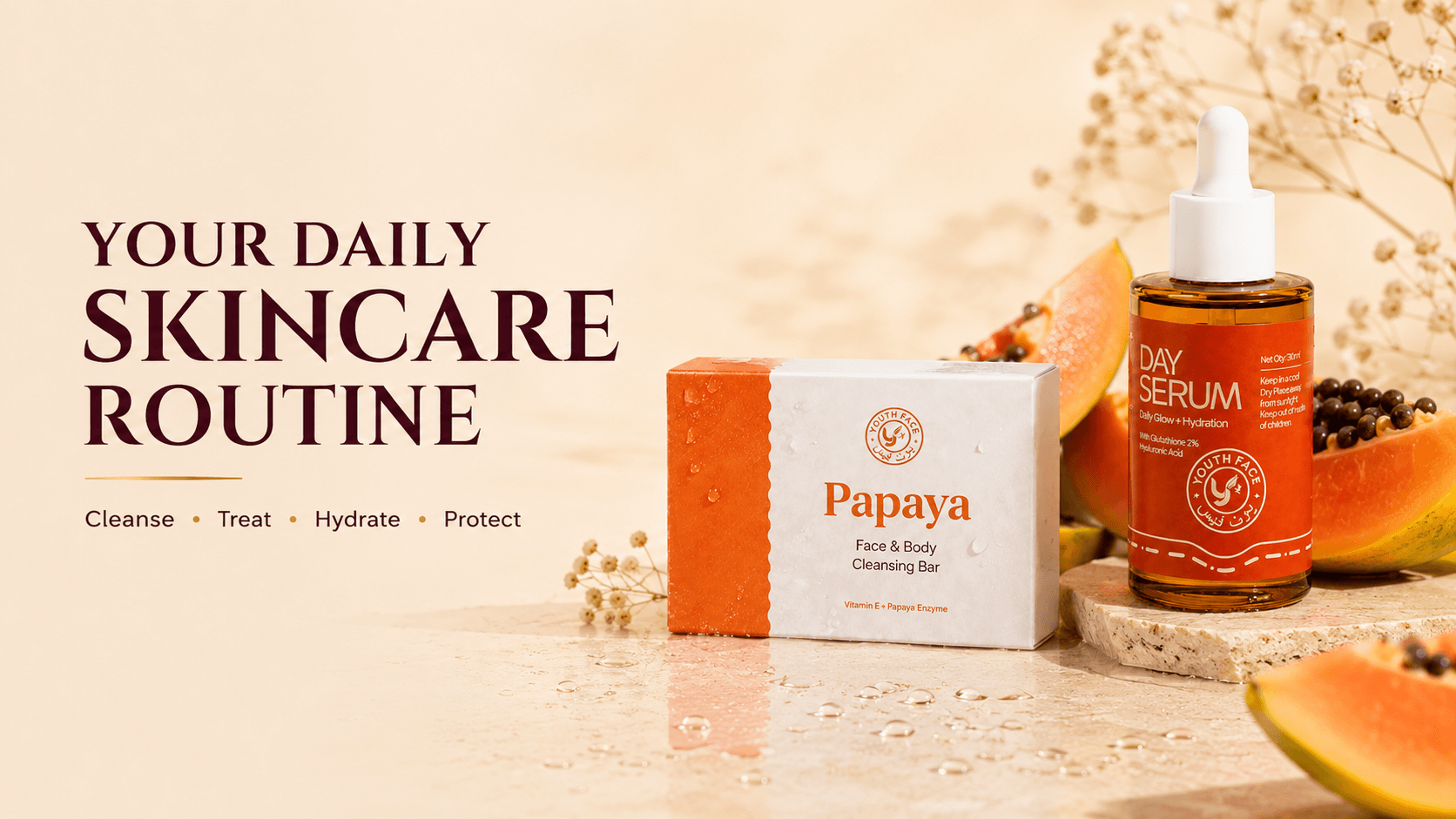
Cleanse → Treat → Hydrate → Protect
FAQ
What is niacinamide?
Niacinamide is a form of vitamin B3 commonly used in skincare formulations. Learn more about niacinamide and its cosmetic applications from the National Center for Biotechnology Information (NCBI). It is used in products designed to support oil balance, skin barrier function, texture and an even-looking complexion.
Is niacinamide good for oily skin?
Niacinamide is commonly used in skincare routines for oily and combination skin because it can support balanced-looking skin and help manage excess oil.
Can niacinamide help with pimples?
Niacinamide can complement an acne-focused skincare routine, particularly when combined with appropriate ingredients such as salicylic acid. Persistent or severe acne should be evaluated by a dermatologist.
Can I use niacinamide every day?
Many niacinamide products are designed for regular use, but always follow the instructions for your particular product.
Is niacinamide suitable for beginners?
Many people can incorporate niacinamide into a beginner skincare routine. Start with one new product at a time and monitor how your skin responds.